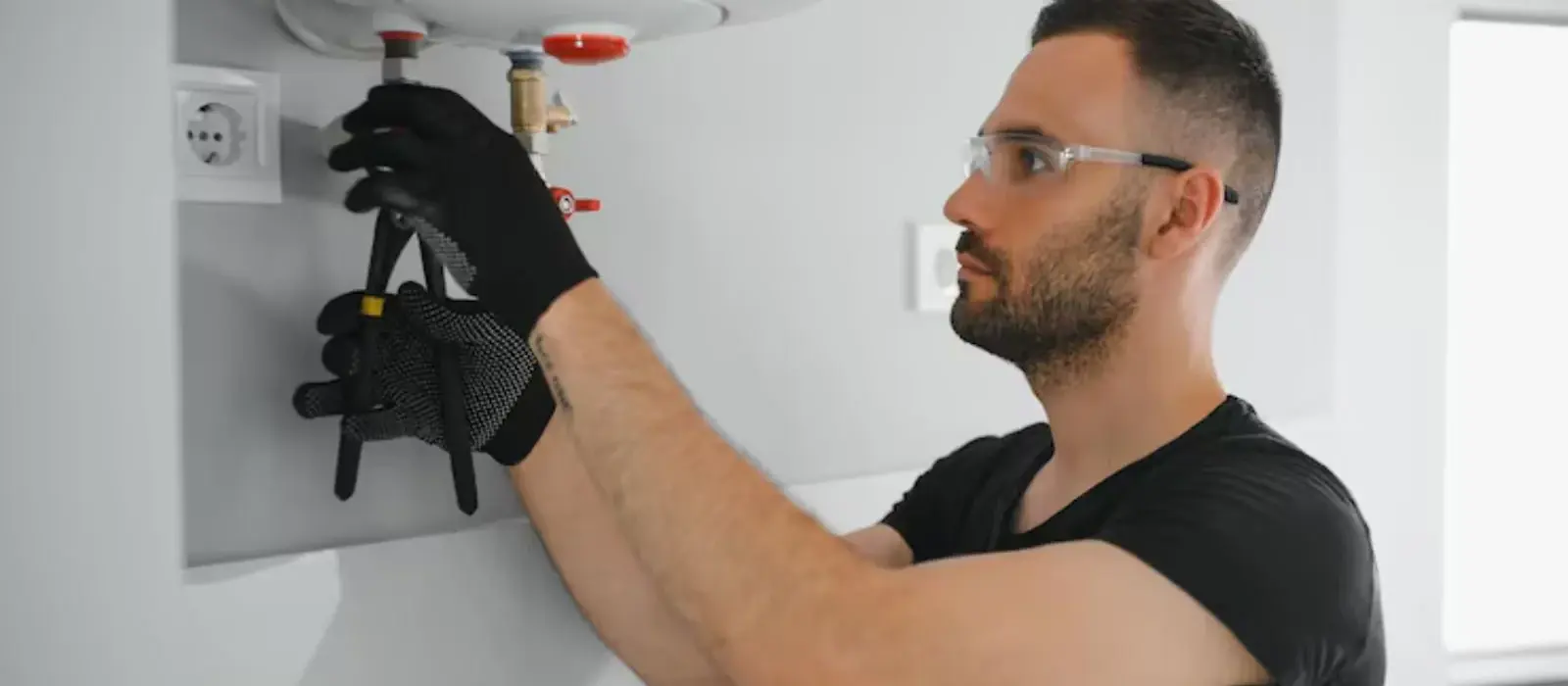
Five warning signs
Rumbling or popping
Sediment at the bottom of the tank traps water that boils and pops.
Rust-colored hot water
Rust inside the tank or the anode rod is depleted.
Moisture at the base
A seam or fitting is weeping, and the tank is beginning to fail.
Less hot water than before
A failed element or sediment-covered burner reduces capacity.
Age
A tank in its second decade is living on borrowed time.
Any one of these can be minor. Two or three together mean it is time to plan. See water heater repair for what is fixable and what is not.
Repair or replace
| Condition | Typical call | Why |
|---|---|---|
| Bad thermostat or element | Repair | Parts are inexpensive |
| Pilot or gas valve problem | Repair | Component failure |
| Leak at a fitting | Often repair | Fittings can be replaced |
| Leak from the tank shell | Replace | The tank is finished |
| Old and rusting inside | Replace | Repairs will not last |
What you can do now
Maintenance that buys time
- Flush a few gallons from the drain valve once a year to reduce sediment.
- Test the temperature and pressure relief valve occasionally by lifting the lever briefly.
- Keep the area around the heater clear and place a drain pan if it sits above finished space.
- Ask a plumber about the anode rod if the heater is middle-aged.
Plan the replacement
A planned replacement lets you choose the size and type, compare quotes and schedule the work at a convenient time. An emergency replacement happens with water on the floor and fewer choices. Our guide to water heater installation describes what is involved, and the tankless water heater page covers the alternative.
Safety
A gas water heater needs proper venting. The smell of gas means leave the house and call the gas utility from outside. A heater with scorch marks, soot or a yellow flame needs service right away. We do not take chances with combustion.
Heater age
Older units are likelier to fail.
Fuel
Gas and electric differ in parts.
Location
Access affects labor.
Code items
Venting, pans and expansion tanks may be needed.
For your real number, call (770) 214-4545.
Heater acting up?
Call and we tell you if it is a repair or time to replace.
What to do in the first ten minutes of a leak
Cut the fuel
Turn off the electric breaker or set the gas control to off.
Close the cold supply
Shut the valve above the tank to stop more water entering.
Open a hot tap
Open a hot faucet somewhere in the house to relieve pressure.
Contain the water
Place towels, a bucket or a wet vacuum and move items off the floor.
Call
Describe the leak so the plumber can bring the right parts and a replacement if needed.
Reading the label
The data label on the tank lists the manufacture date in the serial number, the capacity, the fuel and the energy ratings. Photograph it and keep the photo. It tells a plumber the age of the heater and helps match a replacement.
If you cannot decode the date, ask the plumber. Different brands use different formats, and a heater whose age you cannot determine is best treated as old.
Thinking ahead
If your heater is in its second decade, set aside time to decide what to replace it with before it fails. Compare a like-for-like swap against an upgrade, check the closet for access and think about the fuel. A planned swap lets you choose. An emergency swap picks for you.
Gas heaters: extra safety checks
Warning signs that need immediate attention
- A yellow or orange flame instead of a steady blue one.
- Soot, scorch marks or a burning smell around the heater.
- A draft hood that is loose or a vent pipe that has come apart.
- A smell of gas near the unit. Leave the house and call the gas utility from outside.
These are not do-it-yourself problems. Combustion appliances produce carbon monoxide, and venting problems are dangerous. A working carbon monoxide detector on each level is inexpensive protection.
Electric heaters: what to check
An electric tank can lose hot water when a heating element or thermostat fails. Resetting a tripped limit switch is a quick check, but a heater that trips again needs service. Do not open panels with the power on. If you smell burning or see damage to the wiring, shut off the breaker and call.
Quick reference for older heaters
Photograph the data label. Check the base for moisture monthly. Listen for rumbling. Flush yearly if the unit is healthy. Place a drain pan under heaters in finished space. Decide in advance what you will replace it with, so that a failure becomes a planned job.
If hot water runs out much sooner than it used to, the tank may be full of sediment or an element may have failed. Either is worth a call.
If you are unsure whether your heater is a repair or a replacement, take a photo of the label and the base and send the details to the dispatcher. We tell you honestly which way the evidence points and what each choice involves.
Sources and standards
Gas piping and venting fall under the National Fuel Gas Code, NFPA 54, as adopted locally, and installation follows the manufacturer's instructions and the International Plumbing Code (IPC).
Local note: garage and closet heaters
Many homes in the area keep the heater in a garage or a utility closet. A slow leak there can run for weeks before it reaches carpet. A drain pan with a line to the outside is cheap insurance in Lilburn and Norcross homes alike.
Tell the dispatcher where the heater sits and whether the space is cramped. That helps us bring the right parts.
Questions we hear from homeowners
Many last around ten years or more, depending on water and maintenance.
It is usually sediment, but it signals wear. Have it checked.
Rust in the tank or a depleted anode rod. If only hot water is rusty, the heater is the source.
Yes, once a year if it is working. A very old heater may not tolerate disturbance, so ask first.
Often, when stock and crews allow.