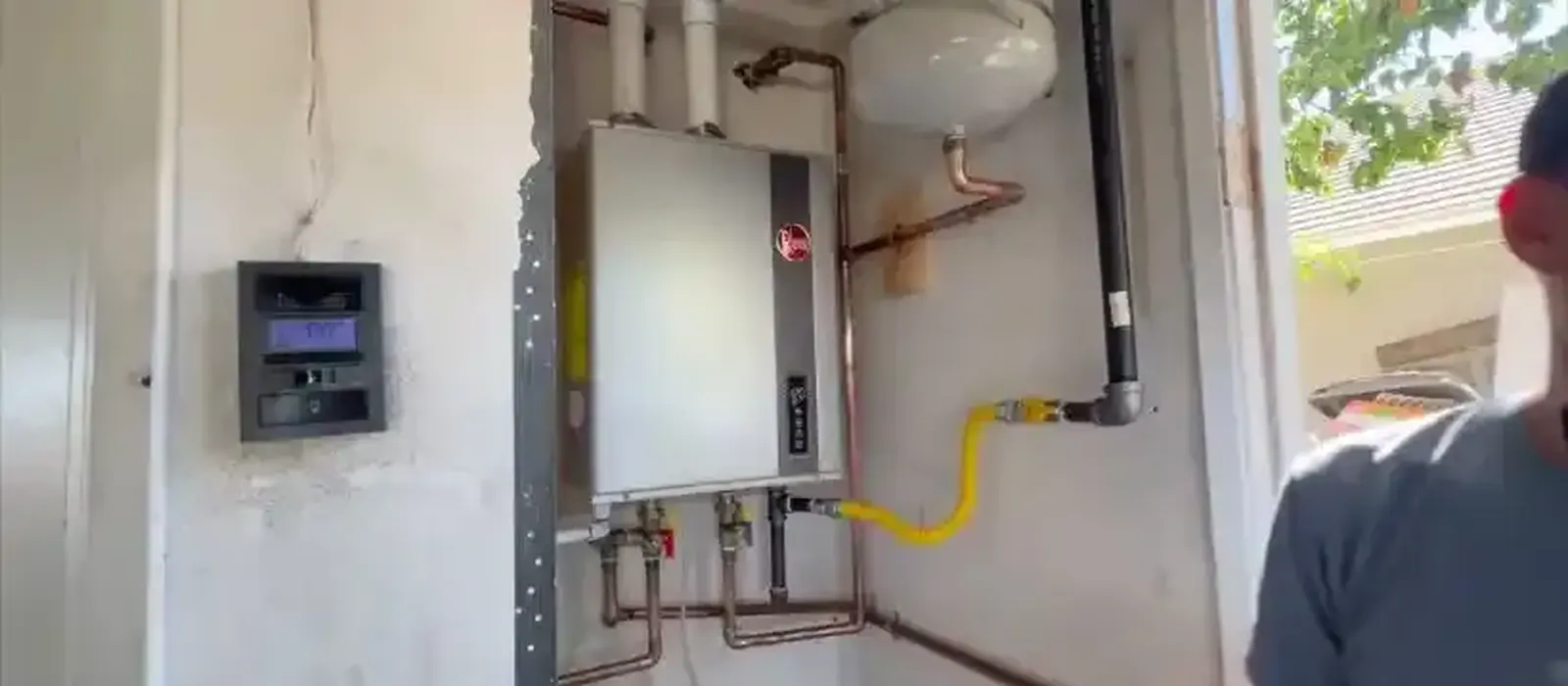
Choosing the unit before the install day
A planned installation lets you compare options at your own pace. The main choices are fuel type, tank size and efficiency level. Gas units heat faster and run cheaper in many homes, but need a flue and a gas line. Electric units are simpler to install and available in compact models. Hybrid heat pump units use less electricity but need airflow and a drain.
We walk the install location, check the existing connections, and recommend a model that fits the space and your household's habits. You decide. We install.
| Install scenario | What we check | Added items to plan for |
|---|---|---|
| Same location, same fuel | Condition of shutoffs, vent and supply lines | New connectors, relief valve, drain pan |
| Gas to electric | Panel capacity and a dedicated circuit | Electrician coordination, gas cap-off |
| Electric to gas | Gas line size and flue path | Venting, gas connection, combustion air |
| Moving to a new location | Supply, drain and venting routes | New piping runs, pan, access panel |
New homes, additions and remodels
Builders and homeowners with a remodel underway call us to rough in or set a heater to a schedule. We coordinate with the project timeline, because a heater set before drywall is closed up needs different protection than one set after.
If your project also adds fixtures, our plumbing installation page covers the rest of the fixture and line work. Tell us the final location of each fixture so the heater can be sized for the load.
Walk-through
We look at the location, the existing lines, the venting and the access.
Quote
You get a flat price in writing or by message before any work starts.
Installation
We set the unit, connect supply, gas or power, venting, relief and drain lines.
Commissioning
We fill, purge, test and show you the shutoffs and the temperature setting.
Safe temperature and the setting most homes should use
Most manufacturers ship tanks with a thermostat set high. Setting the water temperature to about 120 degrees Fahrenheit reduces scald risk, especially in homes with young children or older adults. If anyone in the house has a weakened immune system, ask us about the trade-offs, because very low settings can encourage bacterial growth in a tank.
Pricing factors for a planned install
Equipment
The model you choose is the largest single variable.
Fuel conversion
Switching fuel adds gas, electrical and venting work.
Code items
Expansion tank, drain pan, seismic strapping where required and updated shutoffs.
Location
Garage, closet, attic and basement installs each involve different access.
Permits
Permit rules vary, so ask the City of Tucker permit team whether your project needs one.
Insurance rarely covers a planned upgrade. Some utilities and manufacturers offer rebates on efficient models, and the rules change, so check current offers before you buy. For your real number, call (770) 214-4545 and describe the site.
Planning a new water heater?
Call and we will set a time that works around your schedule.
Local notes for Tucker installs
Drinking water in Tucker comes through DeKalb County Watershed Management. The utility's annual report does not state hardness, so test your tap if you want to know whether a scale-resistant model or a regular flush schedule matters in your house.
Where a heater sits in a closet, clearance is the usual problem. We check clearances before we order, because a heater that fits on paper can fail the access test once the door is open. For homes in Stone Mountain or Clarkston, the same planning applies.
Standards and sources
Plumbing work in Georgia follows the state minimum plumbing code, which is built on the International Plumbing Code (IPC) with Georgia amendments. Ask the City of Tucker permit team which edition and which local rules apply to your address. Plumbers are licensed through the Secretary of State's Division of Master and Journeyman Plumbers, and you can ask for a license number. Gas piping and venting for water heaters fall under the National Fuel Gas Code, NFPA 54, as adopted locally.
Written by Tucker Express Plumbing for homeowners in the Tucker area. We name standards where they apply and tell you when a rule depends on your address.
Questions we hear from homeowners
Often within a few days. Standard sizes are quick to schedule, and we can usually give a window on the first call.
We can discuss it, but we can only stand behind the installation, not the equipment you supply. Tell us the model before you buy so we can check that it suits the space.
Yes, where the space and airflow suit them. We explain the clearance and drain requirements before you commit.
Then it is an urgent job, and we treat it as one. See emergency water heater replacement.
Yes, if the supply, venting and drain routes allow it. We quote relocation work separately so you can see the change.