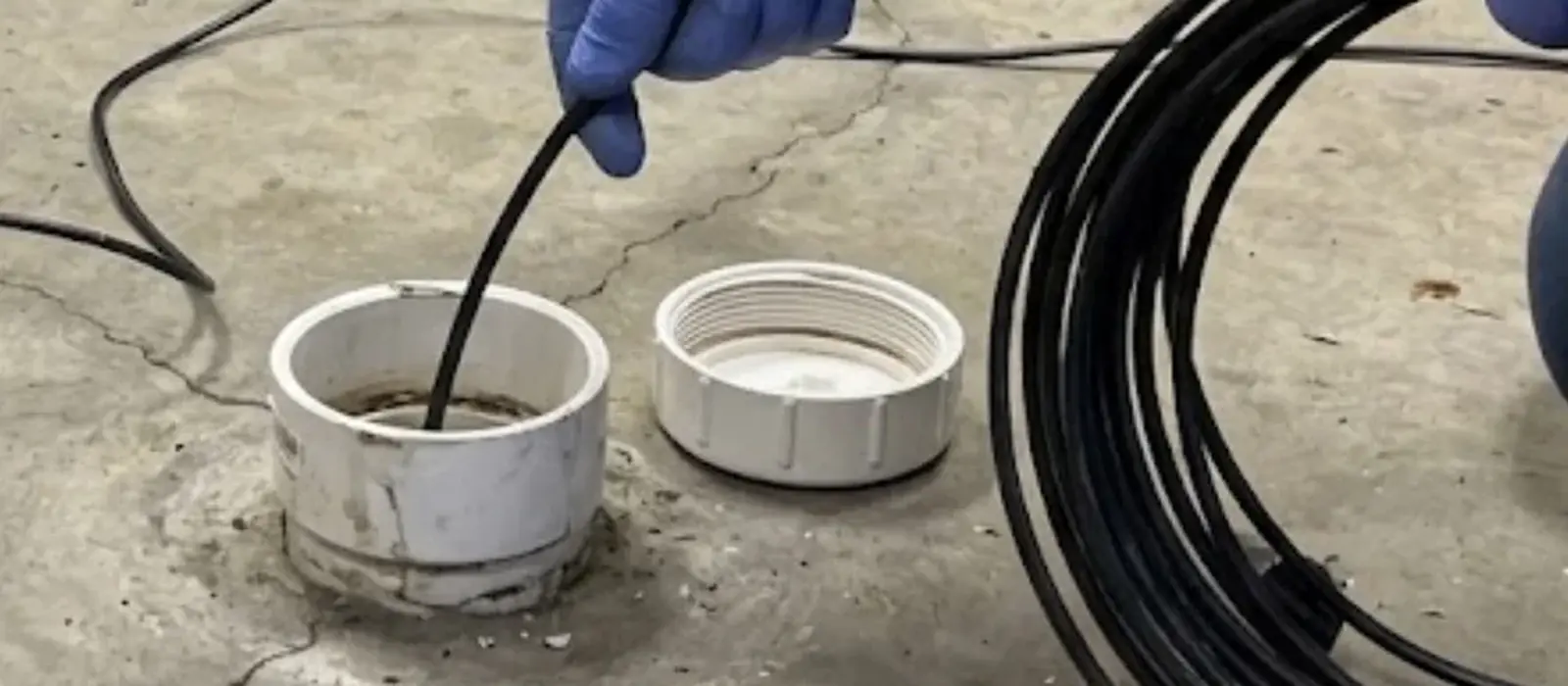
What a sewer scope is
A technician feeds a waterproof camera on a flexible rod through a cleanout or a toilet access point. A monitor shows the live view while the system records. The technician marks distances for each defect, and a locator on the surface tells us where in the yard the camera is. Our sewer camera inspection page covers the process in detail.
| Finding | Meaning | How it affects a purchase |
|---|---|---|
| Clear, round pipe | No immediate issue | Good news, keep the video |
| Roots at joints | Seeping joint | Negotiate cleaning and monitoring |
| Crack or break | Pipe damage | Quote spot repair or lining |
| Belly with standing water | Sag in the line | Section replacement is likely |
| Offset joint | Joint separation | Spot repair |
When to schedule it
Do it inside your inspection or due-diligence window. Ask your agent how long you have and whether the contract allows additional inspections. A scope takes about an hour on most houses and the results are available the same day.
If the seller refuses access, that is information. If the line cannot be scoped because there is no cleanout, tell us. We can often use a toilet access point.
What to bring to the scope
- The address, the lockbox or access details and the date of the inspection window.
- The age of the house if you know it.
- Any disclosure that mentions sewer or drain problems.
- A list of questions about the findings.
Using the results
A clean video gives peace of mind. A damaged line gives you leverage: ask the seller to repair, credit you or reduce the price. Ask us for a repair price range tied to the footage so your request is specific. For repair paths, see sewer line repair.
What a scope does not show
A camera sees the inside of the pipe from the cleanout to the connection it can reach. It does not see through the walls of a house or beyond a blockage. It does not test water pressure. For a full plumbing assessment, pair it with a pressure test and a look at the water heater and supply lines.
Line length
Longer runs take more time.
Access
A cleanout speeds the scope.
Cleaning needed
A clogged line may need cleaning first.
Report
Video and a written summary are included.
For your real number, call (770) 214-4545.
Buying a home?
Call and tell us your inspection date. We schedule scopes quickly when crews are available.
How to read the findings
A camera report lists each finding with a distance from the access point. Find the longest run first. Roots at a joint 40 feet down are a different problem than a belly at 15 feet, and both are different from a crack near the house.
Ask for severity, not just a list. A light offset on an otherwise smooth line is usually a note to monitor. A collapsed section is a repair. Our report separates findings into what to watch and what to fix.
What to ask the seller
- Has the sewer line ever backed up, been cleaned or been repaired?
- Are there records of past camera inspections or repairs?
- Where is the cleanout, and is it accessible?
- Has a large tree near the line been removed or added?
- Are there any disclosures about plumbing or drainage?
Negotiating with a video in hand
Video is hard to argue with. If the line is damaged, you can ask for a repair before closing, a credit toward repair or a price adjustment. Get a written repair estimate so the number is not a guess. If the line is clean, keep the footage as a baseline for the future.
Rules and timing depend on your contract and your agent's advice. Raise the sewer question early in the process, because inspection windows can be short.
Ordering the scope: what the day looks like
Book early
Contact us as soon as the inspection period starts so the visit fits inside it.
Arrange access
Confirm how the technician will get to the cleanout or toilet and whether the house is occupied.
Run the camera
The technician feeds the camera from the cleanout and records the run.
Review on site
You or your agent can watch the monitor if present.
Receive the report
Video and a written summary follow the same day.
Houses that deserve extra attention
- Older houses with clay, cast iron or orangeburg pipe.
- Houses with large mature trees near the sewer path.
- Homes with a history of drain problems or additions.
- Properties where the sewer crosses under a driveway or slab.
- Houses built or remodeled with unpermitted work.
None of these is a reason to walk away. They are reasons to look before you commit. The scope turns a vague worry into a concrete finding you can price.
Quick reference for buyers
Ask for a sewer scope early. Share the video with your agent. Ask for repair estimates tied to the footage. Keep the report in your closing file. If the seller cannot provide access, note it in writing and ask your agent how it affects the contract.
A scope costs a small fraction of a sewer repair. Knowing before closing is almost always better than learning after.
If you are buying in a hurry, ask the technician to call you from the site if something serious shows up on the camera. A same-day phone call lets you decide about the contract while the window is still open.
Sources and standards
Sewer repair standards follow the International Plumbing Code (IPC) as adopted in Georgia. Contract timing and disclosures are a matter for your agent and attorney.
Local note: older neighborhoods and newer ones
Lilburn dates to 1890 and Clarkston was incorporated in 1882, so many streets there include houses decades old with original lines. Newer subdivisions in Lilburn and Clarkston have plastic pipe, which fails in different ways.
Whatever the age, a scope is most useful in the first days of a contract, when a finding can still change the price.
Questions we hear from homeowners
Usually not. It is a separate service you ask for.
Most do if your contract allows inspections. Ask your agent.
You can negotiate a repair or credit, or reconsider the purchase.
It can still help. Builders sometimes leave debris or shift pipe during backfill.
Often yes, through a toilet access point.