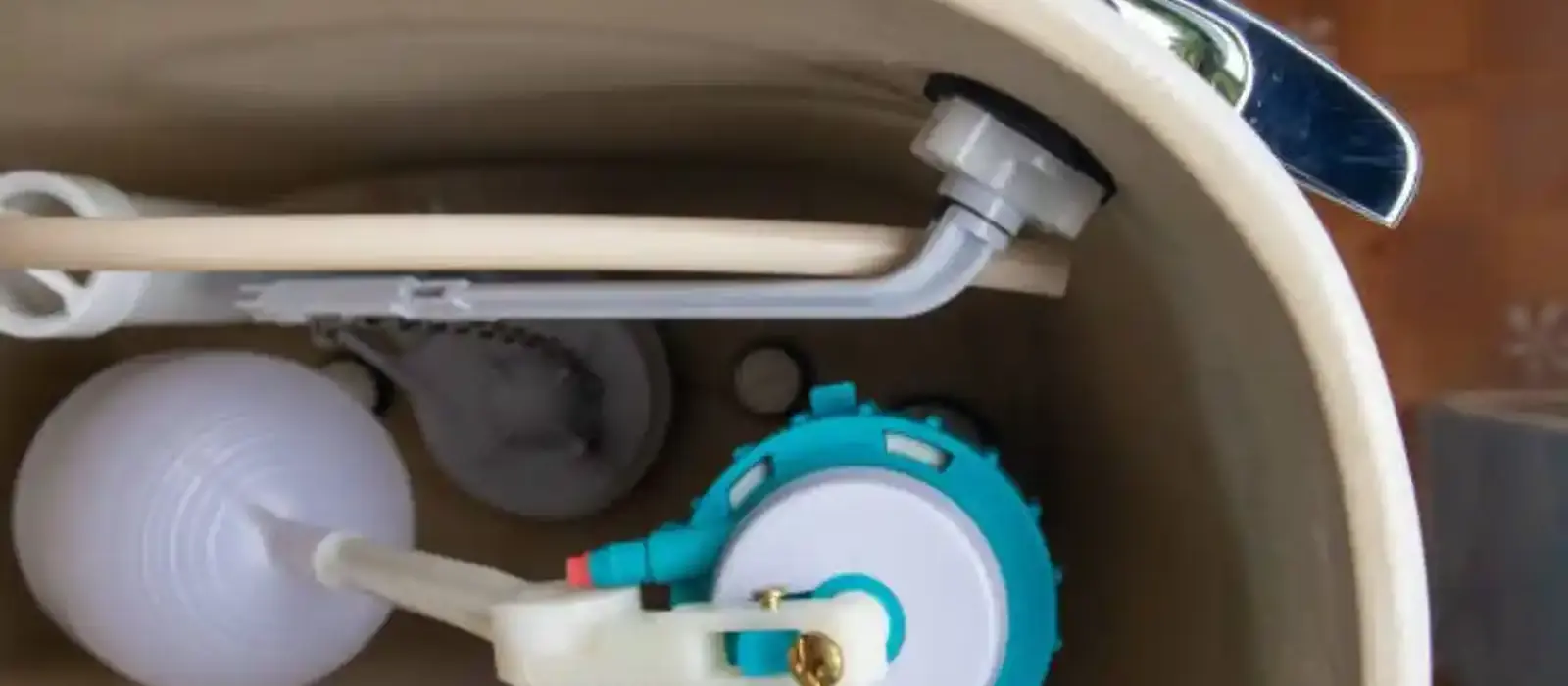
Find the cause in two minutes
Lift the tank lid
Look inside with the toilet quiet.
Check the water level
It should sit about an inch below the overflow tube. If it spills into the tube, the fill valve needs adjusting.
Press the flapper
Push the rubber flapper down with a spoon handle. If the running stops, the flapper is leaking.
Check the chain
It should have a little slack, not tight and not tangled under the flapper.
Dye test
Add food coloring to the tank. If color shows in the bowl without flushing, the flapper is leaking.
| What you hear or see | Cause | Fix |
|---|---|---|
| Water trickles into the bowl | Worn flapper | Replace the flapper |
| Hissing from the tank | Fill valve not shutting off | Adjust or replace the fill valve |
| Water spills into the overflow tube | Level set too high | Lower the float |
| Phantom flush every few minutes | Slow flapper leak | Replace the flapper and clean the seat |
| Handle sticks down | Chain or lever issue | Adjust or replace |
Replace the flapper
Close the shutoff behind the toilet, flush to empty the tank and unhook the old flapper from its ears and chain. Take it to the hardware store to match the size, since some toilets use two-inch and others three-inch flappers. Hook up the new one, adjust the chain and turn the water back on.
Clean the flapper seat with a cloth while you are in there. Mineral buildup on the seat stops a new flapper from sealing.
When it is the fill valve
A fill valve that hisses or will not shut off lets the tank overfill into the overflow tube. Sometimes cleaning debris out of it is enough. Often it is cheaper to replace it. The job is a good one to do yourself if you are comfortable closing the shutoff and disconnecting the supply line. Otherwise, a plumber can do it in a short visit, as described in plumbing installation.
Call a plumber if
- Water is leaking from the base of the toilet.
- The shutoff valve will not turn or drips.
- The tank is cracked.
- You replaced parts and it still runs.
- The toilet is very old and parts are unavailable.
What a running toilet costs you
A silent leak can waste a surprising amount of water without any visible sign. If your bill has crept up, run the meter test described in our leak detection guide. A toilet is the most common source of an unexplained increase.
Parts needed
A flapper is inexpensive, a full rebuild costs more.
Age of toilet
Old models may lack parts.
Shutoff condition
A stuck shutoff adds a replacement.
Time of visit
Planned repairs cost less than emergency calls.
For your real number, call (770) 214-4545.
Toilet still running?
Call and we can come by, often the same day.
Tools and parts for a simple fix
What to have on hand
- A replacement flapper that matches your toilet size.
- A new fill valve if the old one hisses or sticks.
- A small bucket and a sponge for the last water in the tank.
- An adjustable wrench for the supply nut.
- Food coloring for the dye test.
Replacing a fill valve
Shut off and drain
Close the shutoff behind the toilet and flush to empty the tank.
Disconnect
Loosen the supply line nut under the tank and the locknut that holds the valve.
Remove and install
Lift out the old valve, set the new one at the right height and tighten the locknut.
Reconnect and adjust
Attach the supply line and refill hose and set the float to the line in the tank.
Test
Turn the water on, let the tank fill and check for leaks at the nut.
When the toilet itself is the problem
If you have repaired the flapper and fill valve and water still runs, the flush valve seat may be pitted, or the overflow tube cracked. Those can be repaired, but at some point a new toilet is the better value. Modern toilets use less water per flush, and a replacement is a manageable weekend job or a short plumber visit.
Choosing a new toilet
Look at the rough-in distance from the wall to the drain center, usually twelve inches, and measure it before shopping. Compare the bowl shape, the height and the flush rating. Two-piece toilets are easier to carry and repair, while one-piece models are easier to clean. A plumber can confirm the measurements and set the new toilet on a fresh seal.
Quick reference for a running toilet
Lift the lid. Press the flapper. Check the chain. Add dye. Look at the water level against the overflow tube. Replace the part that fails the test. If the toilet rocks, leaks at the base or the shutoff valve is stuck, call. Every running toilet is wasting water, so do not leave it for later.
A fix usually takes less time than the phone call to ask about it.
Sources and standards
The EPA WaterSense label identifies toilets that use 1.28 gallons per flush or less. Installation follows the International Plumbing Code (IPC) and the manufacturer's instructions.
Local note: the tap water your toilet sees
Tucker's tap water is Chattahoochee River water treated at the Scott Candler plant. The county report covering 2025 testing does not give a hardness number we can quote, so if you see white crust on the flapper seat, a home test kit tells you more than we can from here.
The same advice applies in nearby Stone Mountain. In Norcross, the water comes from Lake Lanier through Gwinnett County, so the answer may differ.
Questions we hear from homeowners
A lot over days, since it can run unnoticed. The dye test shows a leak.
A slow flapper leak lowers the tank until the fill valve restarts.
No. Two-inch and three-inch flappers exist, so match the old one.
Mineral deposits can stop a flapper from sealing. Test your tap water, since the DeKalb report we reviewed gives no hardness figure.
If it is cracked or very old, yes. Otherwise parts are cheaper.