The meter test
Stop all water use
Close faucets, make sure the dishwasher and washer are off and no one is showering.
Find the meter
It is usually in a box near the street. Lift the lid carefully.
Read the indicator
Look for the small triangle or dial that spins when water flows.
Wait ten minutes
Note whether the dial moves. If it does, water is escaping.
Close the house main
Check again. If the dial stops, the leak is inside. If it keeps moving, the leak is in the line outside.
Write down the reading and the time. A second reading in an hour tells you how fast the leak is running.
Common sources, from easy to hard
| Source | How to check | Next step |
|---|---|---|
| Toilet flapper | Add dye to the tank, wait twenty minutes | Toilet repair |
| Dripping faucet or hose bib | Look and listen | Faucet repair |
| Irrigation system | Close it off and retest | Irrigation repair |
| Water heater | Look for moisture at the base | Water heater repair |
| Line in a wall or under a slab | Meter moves, nothing visible | Leak detection |
| Service line to the house | Meter moves with the main closed | Service line repair |
The toilet is the usual suspect
A toilet can run silently and waste a great deal of water. Drop a few drops of food coloring into the tank and wait twenty minutes without flushing. If color shows in the bowl, the flapper is leaking. It is an inexpensive part and the most common cause of a surprise bill.
When the leak is hidden
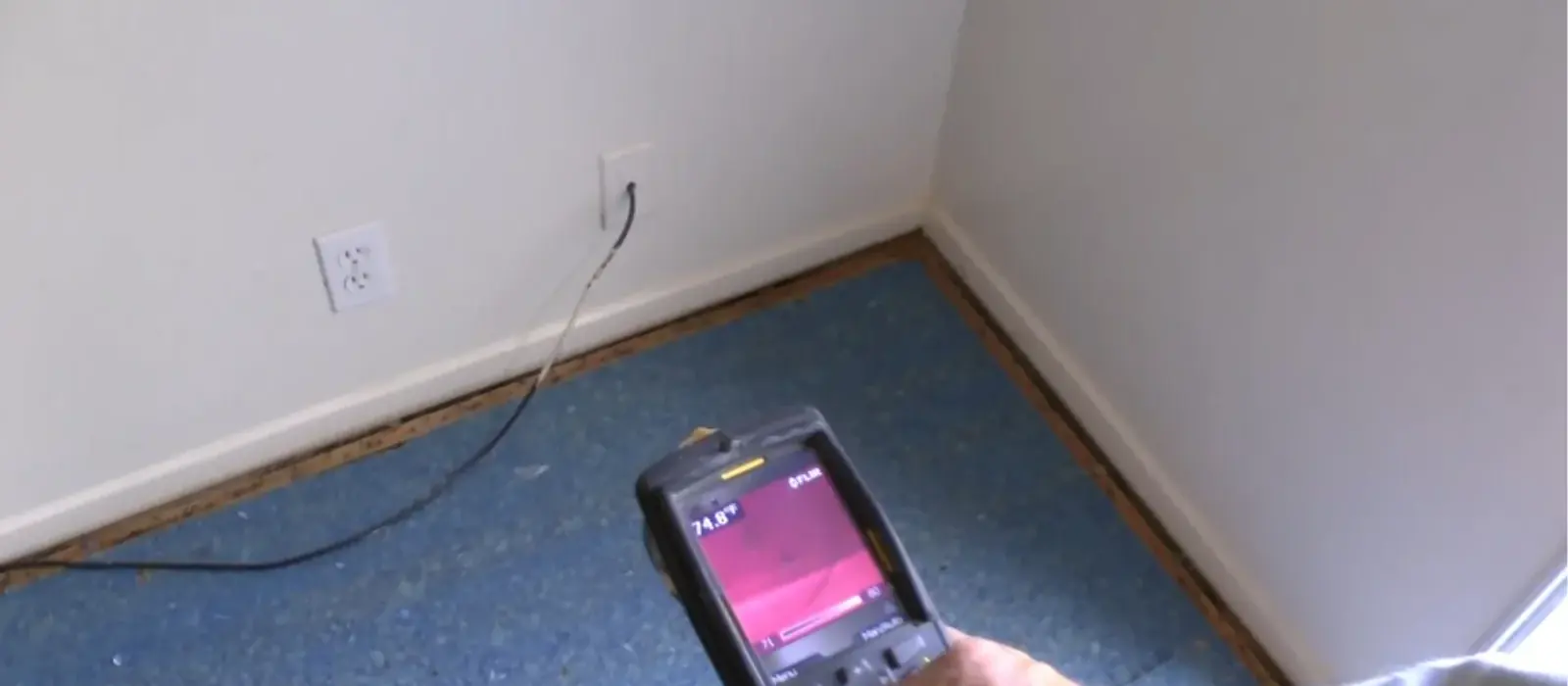
A leak in a wall, ceiling or slab does not announce itself. The signs are a warm floor spot, damp drywall, a musty smell or the sound of running water in a quiet house. Electronic equipment pinpoints the spot so the repair opening is small.
If the leak is under the floor slab, see slab leak repair for what the options are before anyone breaks concrete.
Before you call about a bill
- Do the meter test and note the result.
- Check the last few months of bills for a pattern.
- Photograph the meter and any damp areas.
- Ask the utility whether your meter reads in gallons or cubic feet.
Talk to the utility too
If the meter moves with your house main closed, the leak is between the meter and the house, and you are generally responsible for it. If the meter itself looks damaged or is leaking at the box, call the utility. We help you decide which side the problem is on.
Where the leak is
A toilet part is cheap. A buried line is not.
Detection needed
Hidden leaks need equipment.
Access
Open crawlspaces help.
Repair method
Spot repair or reroute.
For your real number, call (770) 214-4545.
Meter still moving?
Call and tell the dispatcher what the dial does with the main closed.
Reading your bill like a plumber
Look at the usage line, not just the total. Compare this month to the same month last year, since summer irrigation changes use. A steady climb over several months suggests a slow leak. A sudden jump suggests a break or a failed part such as a stuck fill valve.
If the bill rose after a repair or a change in the household, check what changed. A new guest, a filled pool or a new irrigation zone can all explain a jump. If nothing changed, the meter test is the next step.
The toilet, the heater and the irrigation line
Three places account for most house leaks that are not in the walls. The toilet leaks through the flapper. The water heater leaks at a fitting or the relief valve. The irrigation system leaks underground, where you cannot see it. Check each before suspecting a pipe in the wall.
What a plumber does with a positive meter test
Isolate the zone
Fixture shutoffs and the house main are used to narrow where the leak sits.
Pressure test
The supply system is tested to see whether it holds pressure.
Listen and scan
Acoustic equipment and thermal imaging narrow the location.
Mark the spot
The leak is marked on the surface so the opening is as small as possible.
Propose repair
You are given the repair options and what each involves.
You do not need to guess. Giving the plumber the meter result and the bill history saves time on site. If the meter is moving and you cannot find the cause, a detection visit is faster and cheaper than opening walls on a hunch.
Keep the evidence
Photograph the meter, save the bills and keep the plumber's report. If the leak caused damage, these documents support an insurance claim. Some utilities will consider an adjustment for a verified leak, and policies differ, so ask yours.
When it is not a leak
Not every high bill is a leak. Seasonal irrigation, a new baby, a visiting family and a long hot spell all raise use. Check whether the bill reflects a rate change or a different billing period. If the meter does not move with everything off, the usage is real, and the answer is habit, not repair.
Sources and standards
Meter reading steps vary by model, so check your utility's guidance. Repairs follow the International Plumbing Code (IPC) as adopted in Georgia.
Local note: where the water meter sits
In Tucker and nearby DeKalb towns like Stone Mountain and Clarkston, the meter is read by DeKalb County Watershed Management. The meter and the street side belong to the utility, while the line from the meter to your house is generally yours.
Dial layouts vary. If yours is unclear, take a photo and show it to the dispatcher.
Questions we hear from homeowners
Some utilities have adjustment policies. Ask yours, and keep the plumber's report.
A silent flapper leak can waste a lot over days. Dye in the tank shows it.
Only if everything is off. Check that no one is using water, including an ice maker.
For toilets and faucets, no. For walls, slabs and buried lines, yes.
A long-running leak can soften soil and damage finishes. Early detection prevents that.