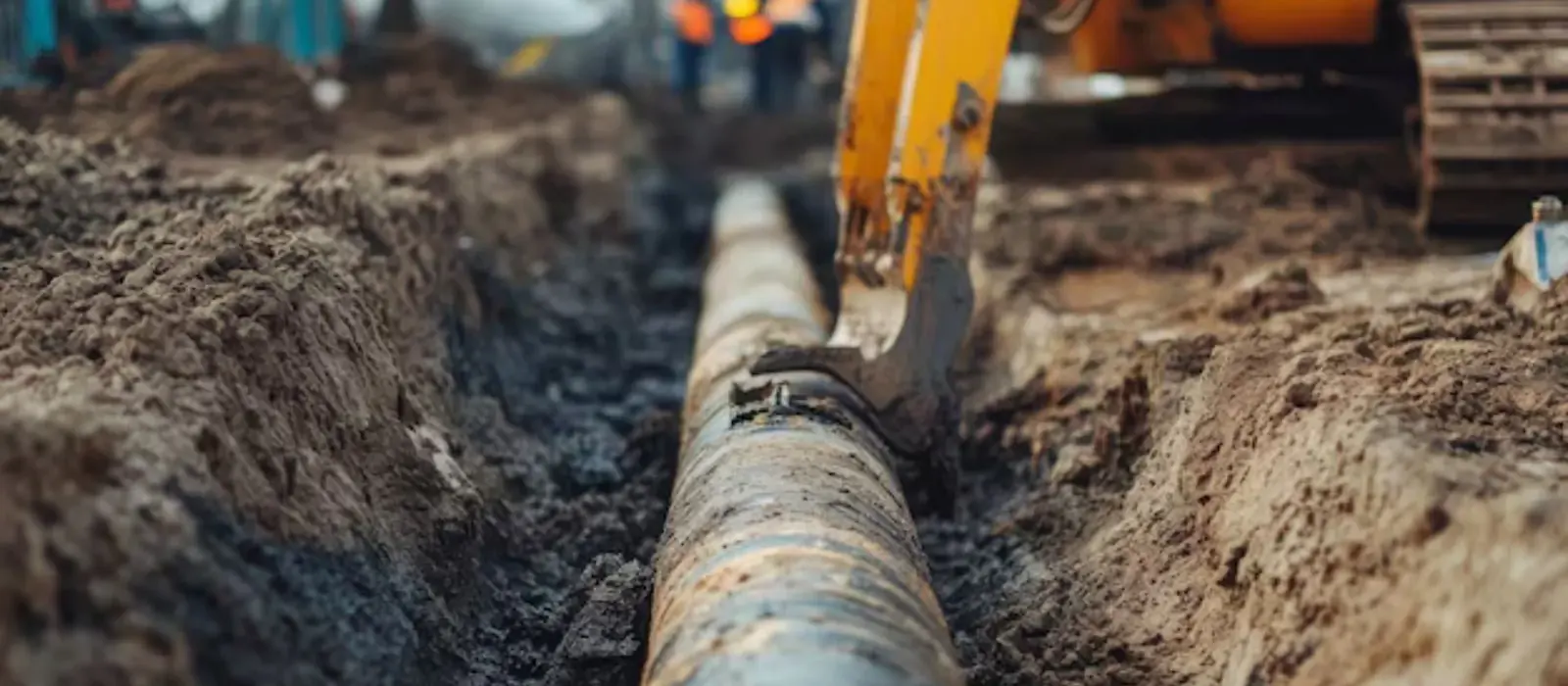
What Georgia 811 does
Georgia 811 is a free service. You tell it where you plan to dig, and utility operators send locators to mark their buried lines with paint or flags. The notice should be submitted at least three business days before digging, so the marks are on the ground when you start.
The marks show approximate positions of public utility lines up to your property meter or connection. Lines on your side of the meter, such as a private water service line or a yard irrigation line, may not be marked, so a plumber who knows the site matters.
| Project | Call 811? | Why |
|---|---|---|
| Fence or mailbox post | Yes | Lines can be shallow |
| Tree planting | Yes | Roots and holes reach lines |
| Sewer or water line repair | Yes | Utilities run in the same corridors |
| Surface garden bed | Usually not | Shallow soil work only |
What marks mean
Reading the paint
- Red usually marks electric lines.
- Yellow usually marks gas or oil lines.
- Orange usually marks communications lines.
- Blue usually marks potable water.
- Green usually marks sewer and drain lines.
Colors follow a standard code in the United States. Keep the marks from being washed away before the work is finished.
How we use it
For any excavation, including a water service line repair, we submit the notice and wait for marks before digging. We use a camera or a locator to find private lines, then dig by hand near marked lines. Waiting a few days is almost always cheaper than repairing a cut line.
What if I hit a line?
Stop work. If you hit gas or smell gas, leave the area and call 911. If you hit a water line, close the house main and call us, as in our burst pipe repair steps. If it is a utility line, call the utility. Do not try to repair it yourself.
Trenchless options
Some jobs do not need a long trench. A trenchless pull replaces a line through a small entry pit, when soil and path allow. We explain when it fits on the service line page. Even those require a call to 811 first.
Dig depth
Deeper work means more care.
Number of utilities
More lines mean more marks.
Wait time
Plan for the notice period.
Hand digging
Near marks it is slower but safer.
For your real number, call (770) 214-4545.
Planning excavation?
Call and we handle the 811 notice for our work.
Step by step: placing the request
Plan the area
Decide where you will dig and mark it with white paint or flags if the process asks for it.
Contact 811
Call or use the online request with the address and a description of the work.
Wait for marks
Allow at least three business days for the utilities to respond.
Confirm the marks
Walk the area and check that each utility has responded.
Dig with care
Hand dig near marked lines and keep the marks visible.
Who this is for
Homeowners planning fences, decks, trees and drainage work. Contractors planning excavation for any reason. Plumbers working on service lines and sewers. The rule is the same for all of them.
It is easy to think a shallow hole cannot hit anything. Lines can be shallower than expected, especially after grading changes or erosion. The notice costs nothing, and the downside of skipping it can include injury, outages and repair bills.
Mistakes that cause damage
- Assuming a neighbor's line depth matches yours.
- Digging before all utilities have responded.
- Letting marks wash away and then guessing.
- Using a machine close to marked lines instead of hand tools.
- Treating a private line as marked when only public lines are.
Private lines are your job
The utilities mark their own lines. Private lines, such as an irrigation line, a yard light cable or a service pipe past the meter, may not be marked. If you have one, locate it before digging, using plans, a private locator or a plumber. We use meter tests, locators and cameras to find private lines before we excavate.
Working near a line you hit before
Some yards already carry a repair history: a patch on a water line, a rerouted cable, a drainage trench that was never recorded. Tell the person who marks the lines and the plumber about any past work you know of. Ask previous owners, if possible. Old repairs do not appear on maps, and a surprise in a trench is expensive.
Small projects that still count
A mailbox post, a clothesline pole, a new tree and a basketball hoop base all involve digging. People often skip the call for a hole they think is too small to matter. A fence post hole is deeper than most people expect, and lines run along property edges where fences go.
If you hire a landscaper or fence installer, ask whether they have submitted the request. A professional who says it is unnecessary is a professional to question.
Quick reference before you pick up a shovel
Call or submit the request, wait the stated time, check every utility has marked or cleared the area, hand dig near the marks and keep the paint visible. If your plan changes, such as a larger area or a different date, update the request. If marks fade before you finish, ask for them to be refreshed.
If anything unexpected turns up in the hole, stop. A cable, pipe or warning tape means the marks missed something or the line was moved. Call the utility or a professional before continuing.
Sources and standards
Georgia 811 sets the notice process for digging, and the three business day lead time comes from that service. Utility marking colors follow the common American Public Works Association color code.
Local note: creeks, slopes and shallow lines
Tucker sits near the Eastern Continental Divide and several creek headwaters, including Burnt Fork and Henderson Mill Creek. Slopes and creek corridors mean lines can run at varied depths, so do not assume depth from a neighbor's yard.
The same advice applies in Lilburn and Clarkston, where older neighborhoods may have lines in unexpected locations.
Questions we hear from homeowners
Yes, it is a free service for homeowners and contractors.
At least three business days before digging.
Often not. Lines past the meter or the connection may not be marked by the utilities.
Marks are valid for a limited time. Ask when you call.
It can be you, so call before digging.